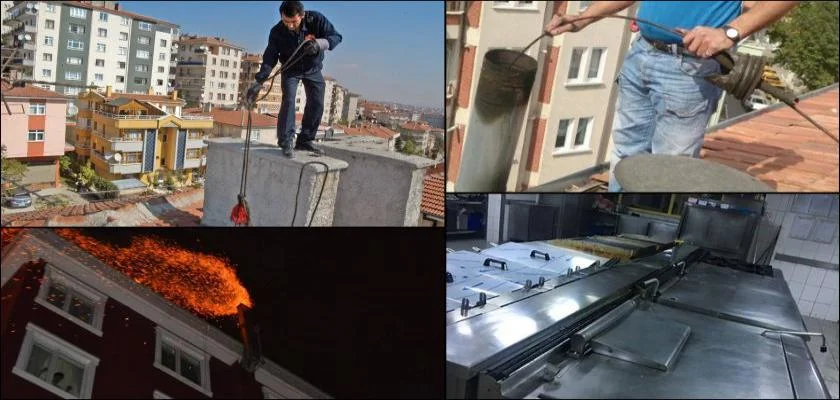
What are Smoke Ducts?
The materials used in the construction phase of chimneys must be non-combustible and must be permanent in shape and size. The surfaces of chimneys should always be smooth and have a maximum roughness of 2 mm. Chimneys must be resistant to fire for 90 minutes, not caused by the chimney itself, and during this period, fire should not spread to other floors through the chimney pathways. Effective chimney heights must be at least 4m, and all chimneys must have a
chimney cleaning report. Chimneys should not cause fire due to soot and must be structurally strong and completely airtight. Smoke ducts are the inclined ducts between the boiler and the chimney, and to prevent cooling of flue gases in the ducts, the connecting pipe should be as short as possible and inclined upwards by at least 2%.
What is the Fire Resistance of Chimneys?
Insulating the connecting pipes of smoke ducts has been rarely applied so far, but it is one of the most effective methods and systems. Additionally, chimney pipes should be as short as possible and inclined upwards. Every chimney must have a chimney report. Chimneys must maintain their resistance against any external fire and danger for at least 90 minutes. At the same time, a fire occurring on one floor of the building for any reason should not spread to other floors due to the chimney. For all these reasons, chimney maintenance and cleaning must be performed at regular intervals, and a chimney report must be obtained.