
NASA's History and Missions: Exploring Space
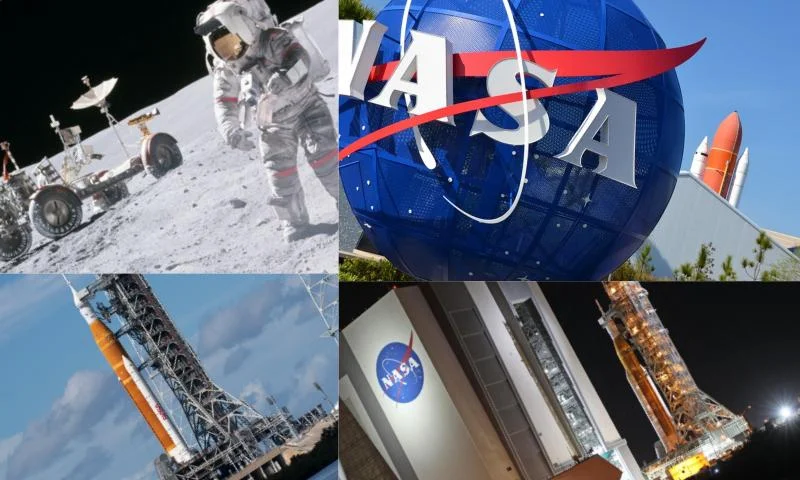
NASA, known as the National Aeronautics and Space Administration, was founded in 1958. This agency undertakes a series of missions focused on space exploration, scientific research, and space sciences. With impressive projects such as the first human landing on the Moon, Mars explorations, and a series of space telescope missions, NASA plays a pioneering role in science and discovery worldwide. For information on this topic and to ask your curious questions, you can look at the relevant online companies on the internet pages and conduct a detailed review from here.
NASA's Hubble Space Telescope: A Journey into the Depths of the Universe
The Hubble Space Telescope is one of NASA's most iconic projects. Launched in 1990, Hubble opened a vast window beyond Earth's atmosphere, into the depths of the void. Hubble's stunning visuals have contributed to our understanding of fundamental concepts such as the birth of galaxies, the death of stars, and the expansion of the universe. Hubble has been a revolutionary research tool, illuminating many unknowns in astronomy.
NASA's Future: Artemis and Mars Journeys
Focusing on future major space explorations, NASA has launched the Artemis program. Artemis aims to send astronauts back to the Moon and land the first woman and the next man on the lunar surface. Additionally, work is underway to plan human journeys to Mars. NASA appears poised to continue making significant contributions to space exploration in the future, maintaining its commitment to human missions and space research.