
The Princehood Years of Sultan Abdülaziz
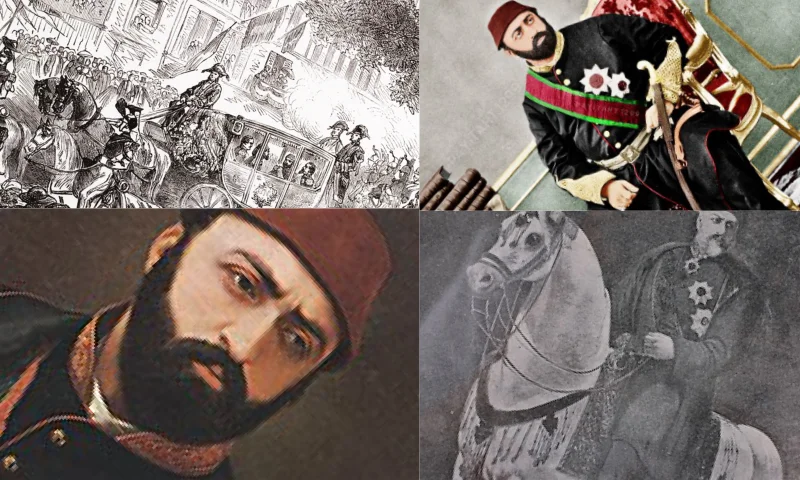
Sultan Abdülaziz Khan was born in Istanbul on February 8, 1830. His father was Sultan Mahmud II, and his mother was Pertevniyal Valide Sultan. During the princehood of Sultan Abdülaziz Khan, the person who would ascend to the throne in the Ottoman Empire was the Sultan's eldest son. This situation prevented struggles for the throne. Thus, the princes lived a comfortable life. Prince Abdülaziz was one of them. He spent his princehood in Istanbul with his brother, Prince Abdülmecid. These two princes received lessons from private tutors in Istanbul. They gained knowledge in many fields. Prince Abdülaziz was a prince with a fair complexion, a stern gaze, dressed simply, and had hazel eyes. He did not take any steps towards the throne until his father and brother died. His father, Sultan Mahmud II, passed away on July 1, 1839. Upon the Sultan's death, his eldest son, Abdülmecid, ascended to the throne. Sultan Abdülmecid's first act was to enact the Tanzimat Edict, the foundation of which was laid by his father. The Tanzimat Edict caused significant changes in the Ottoman Empire. Although these changes were not well-received by the public and the military, they were welcomed by the minorities. Sultan Abdülmecid borrowed extensively from Europe during his reign. These debts became a problem for subsequent Sultans as well. Sultan Abdülmecid did not pressure his brother, Prince Abdülaziz. He ensured he lived a comfortable life. In this way, Prince Abdülaziz gained experience in state affairs.
The Reign of Sultan Abdülaziz
After the death of Sultan Abdülmecid on June 26, 1861, the throne was ascended by the eldest member of the dynasty, the 31-year-old Prince Abdülaziz. Unlike his father and brother, Sultan Abdülaziz was not an innovator. He was one of the highly religious Sultans. Initially, he opposed the state's efforts to emulate Europeans. In this direction, things like theater, ballet, and opera were banned. Unlike his brother, Sultan Abdülaziz avoided unnecessary spending. His brother, Sultan Abdülmecid, built many unnecessary palaces and bridges during his reign. It is also known that the Sultan lived a palace life. Sultan Abdülaziz opposed all of this. He dedicated his life to the troubles of the people and the country. The Sultan's top priorities were always the debts incurred from Europe and the revolts of the minorities. Sultan Abdülaziz had to borrow from Europe many times during his reign. He spent a large portion of these loans on the Ottoman navy. Sultan Abdülaziz did everything he could for the development and modernization of the navy. Furthermore, one of his most important contributions in the military field was the introduction of modern cannons and rifles to the Ottoman army. Until the reign of Sultan Abdülaziz, the Ottomans fought with old-fashioned cannons, rifles, swords, and shields. However, Sultan Abdülaziz changed this situation, bringing modern cannons and rifles to the Ottoman Empire.
Revolts and Events During the Reign of Sultan Abdülaziz
One of the most significant problems during Sultan Abdülaziz's reign was the revolt of the minorities. The minorities living in the Ottoman Empire were greatly influenced by the Nationalism movement that began in France in 1789. The nations influenced by this movement revolted one by one. The Serbs were the first to start a revolt. After the Serbs, the Greeks also started a revolt in 1821. In this context, the nations that gained their independence became a great problem for the Ottoman Empire. These revolts continued until the collapse of the state. The most rebellious and troublesome nation during Sultan Abdülaziz's reign was the Bulgarians. The Bulgarian rebels ignited the fire of rebellion in their region and massacred many innocent Turks. This situation further disrupted peace in the Balkans. Sultan Abdülaziz took measures against the Bulgarians and sent his commanders to prevent them. In this regard, the Ottomans were successful and suppressed the Bulgarian revolts. However, the Bulgarians revolted again over the years and put the Ottoman Empire in a difficult position. The revolts of the Bulgarians and other nations led to a constant state of war in the Balkans. During the reign of Sultan Abdülmecid, the loss of Crimea also led to a large influx of migration. This was also one of the issues that Sultan Abdülaziz dealt with. Another significant event during Sultan Abdülaziz's reign was the annexation of East Turkestan to the Ottoman Empire. East Turkestan had struggled with the Chinese for centuries and tried to gain its independence. Although they gained their independence many times in this regard, the Chinese reoccupied the region. The East Turkestan Islamic Republic aimed to gain the support of a great power like the Ottoman Empire behind it. Following the proposal submitted to Sultan Abdülaziz, East Turkestan was annexed to the Ottoman Empire. Coins minted in the region were struck in the name of Sultan Abdülaziz, and the Friday sermon was read in his name. Additionally, the Ottoman flag was raised on state institutions. This arrangement continued for a few years. The economic problems of the Ottoman Empire led to the cessation of gold sent to East Turkestan. The Ottoman withdrawal from the region caused the Chinese to occupy Turkestan again.
The Innovative Character of Sultan Abdülaziz and the 1876 Coup
Although Sultan Abdülaziz adopted a stern stance against modernization efforts in the early years of his reign, this character later changed. Sultan Abdülaziz's trip to France and his exposure to European progress there changed all his ideas. The Sultan then allowed modernization efforts and lifted all the prohibitions he had previously imposed. This led to him being admired by Westerners. Although Sultan Abdülaziz was a Sultan who supported innovations and fought against revolts, his debts from Europe and his failure to teach Westerners a proper lesson led to him being disliked by some circles. Pashas like Mithat Pasha and Hüseyin Avni Pasha considered Sultan Abdülaziz to be incompetent. Therefore, these two Pashas, with the support of the military, carried out the first political coup in Ottoman history. After the 1876 coup, Sultan Abdülaziz was killed by cutting his wrists. This incident was disguised as suicide. His tomb is located in the tomb of Sultan Mahmud II.